The Hundred Lots おみくじOmikuji of the Japanese temples

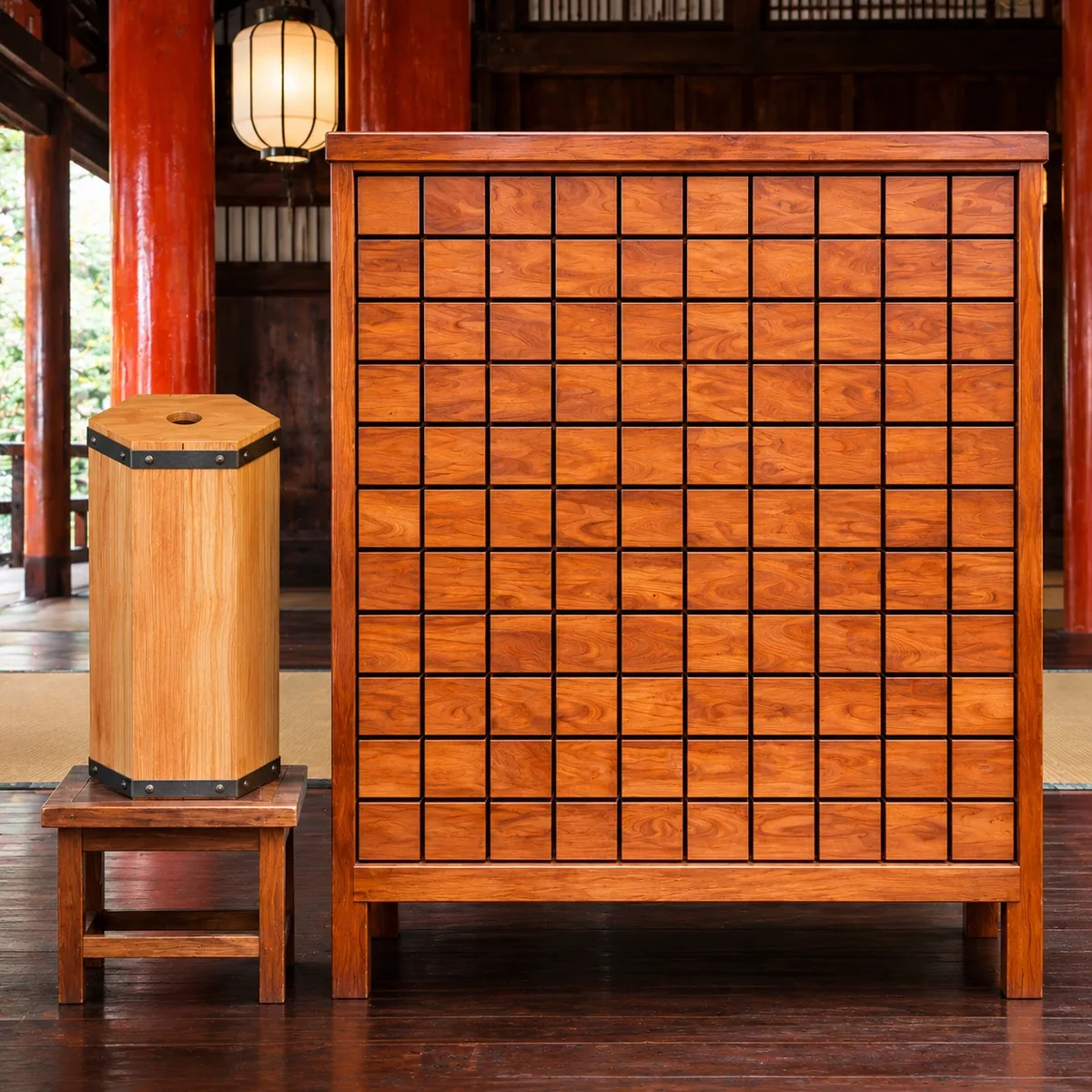
At temples all over Japan you can put a question to Kannon, the Buddhist saint of mercy. You shake a six-sided wooden box until one numbered stick slides out of a hole in its top. The number opens a little drawer, and in it is your paper: a grade of luck, a four-line poem in Chinese, and short advice on things like lost things, travel and love. If the luck is bad, you tie the paper up at the temple and leave the bad luck behind.
These are the real hundred poems, used in Japan for about four hundred years and still drawn today at Sensō-ji, Tokyo's oldest temple.
How to consult
- Think of your question. Type it in if you like; it stays on your device.
- Bow, then tap the box (or Shake the box). It rattles, and one stick slides out of the hole.
- The number on the stick opens its drawer. Read your paper: the grade, the old poem with our English, and the advice.
- If it is bad luck, tie it to the rack and leave the bad luck at the temple. If it is good, keep it.
The grades of luck
How many of the hundred lots have each grade.
Your question and answers stay on this device.
Your past papers
How do we know?
- ✔ The poems are real and old. Each lot is a Chinese poem of four lines of five characters. The set came from China, where temples of Guanyin (Kannon in Japan) gave out numbered poems in the same way; the Japanese printings call it the lots of Kannon.
- ✔ It was printed again and again. Books of the hundred lots, with a picture and an explanation for each, were printed in Japan from at least 1729. Our Chinese text was put together from 13 printings of 1882 to 1915 kept in Japan's National Diet Library, character by character, and the doubtful lots were checked against the page pictures.
- ≈ Ganzan Daishi. The set is named after Ryōgen (912–985), a famous abbot of Mount Hiei, called Ganzan Daishi. The story says Kannon gave him the poems. Historians think his name was attached to them much later, in the 1600s, when the monk Tenkai and his followers spread the set.
- ✔ Bad luck is common. Thirty of the hundred lots are 凶, bad luck, so almost one visitor in three draws one. Sensō-ji still uses this set and is famous for it.
- ✔ Tying the paper. Sensō-ji asks people who draw bad luck to tie the paper at the temple and ask Kannon for protection. Many people believe the bad luck stays behind at the holy place, while a good paper is kept and carried home.
- ≈ Temples and shrines. Shinto shrines give out omikuji too, but most shrine papers today are newer sets, often with Japanese poems, printed by modern companies. This app uses the old temple set, because its texts are centuries old and free to use.
- ✔ What we left out. The old papers also forecast whether a sick person would recover, matters of life and death, and the rice market. We left those out, and the marriage and hiring advice, and kept the rest.
- ✔ Our words. The English translations, readings and the advice in English are written for this app.
Chinese poems and grades: 元三大師御籤独判断 (手塚貞彦, 1882), 元三大師御籖絵抄 (1883), 百番御籤解 (1885), 易占及骨相法 (博文館, 1900) and nine other printings to 開運御鬮独占ひ (1915, the source of the advice headings), National Diet Library Digital Collections (public domain). English and readings: our own. Sounds: made in the browser.
Kannon is listening.