The Twenty-Sided Die of the Gods
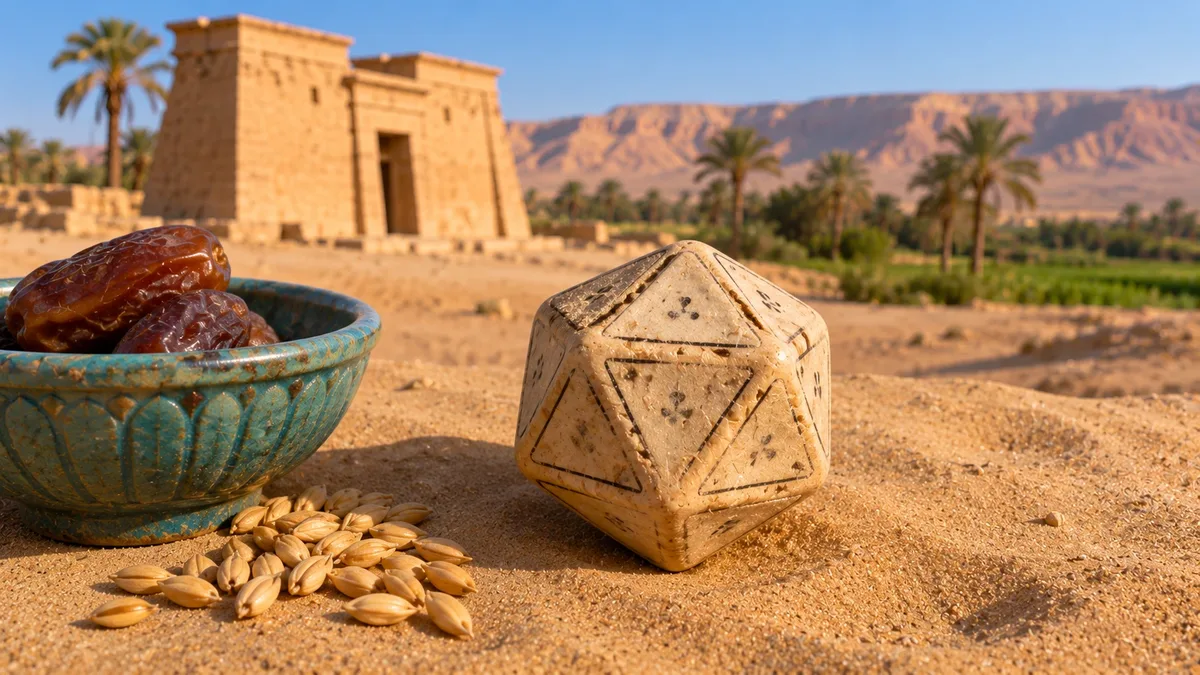
In the 1980s, archaeologists in Dakhleh Oasis, deep in Egypt's Western Desert, found a small limestone die with twenty triangular faces. On every face someone had written the name of a god in black ink, in Demotic, the everyday Egyptian script of Roman times: Amun, Isis, Thoth, Bastet, Shai the god of fate, and fifteen more. Nobody wrote down how it was used. The best guess is that you threw it, and the god who came up was the one who could help you.
The twenty gods
How to consult
- Think of what is troubling you, or what you need help with. Type it in if you like; it stays on your device.
- Tap Throw the die.
- The face that comes up names your god. Read who the god is, what they may help you with, and what they might say to you.
This is a modern way to use the die: no ancient instructions or answers survive.
Your question and answers stay on this device.
Your past answers
How do we know?
- ✔ The die is real.
- ✔ Its date and size.
- ✔ The twenty gods. Each face has one god's name in Demotic. Some are great gods of all Egypt, like Amun and Isis; some belong to the oasis, like Amun, Mut and Khonsu of the nearby temple at Deir el-Haggar; two, Shai and Shepshit, stand for fate and good fortune.
- ≈ How it was used.
- ≈ The numbers. The numbers 1 to 20 were added by the scholar who published it, not by the ancient maker. The app makes every face equally likely; the real die is rough and uneven.
- ✔ Our words. The descriptions of the gods and all the messages and readings are written for this app.
The die lies in the sand.
The gods are waiting to be met.